
Adaptive Utensils for Tremors: How Self-Leveling Silverware Can Restore Independence at Mealtime
- Hillary Klingsmith
- Feb 21
- 2 min read

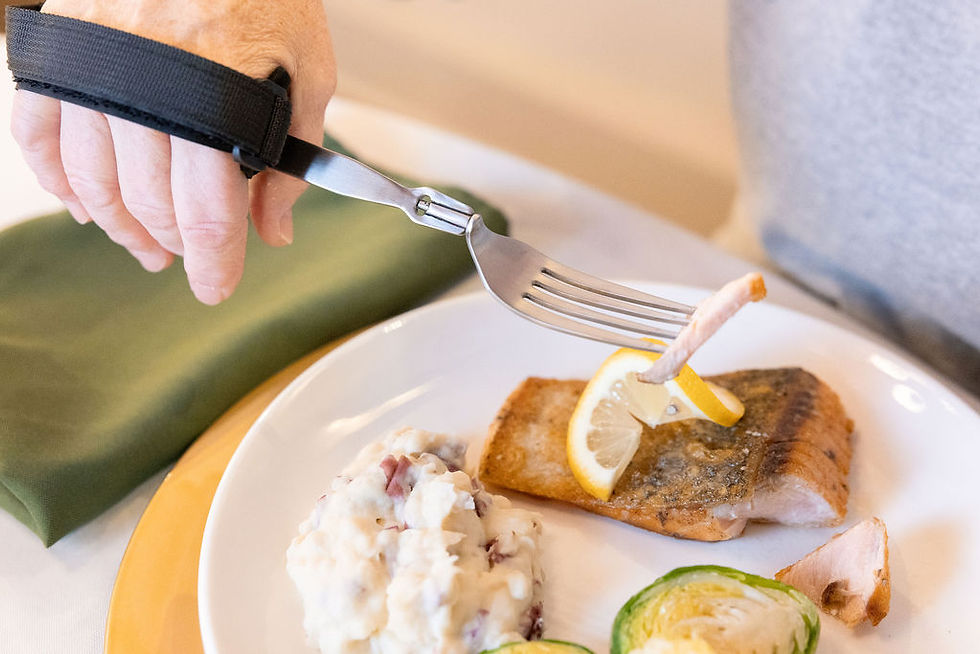
For many people living with tremors, reduced grip strength, or limited hand mobility, mealtime can become frustrating and stressful. Spills, shaking, and difficulty lifting utensils can make something simple feel overwhelming.Adaptive utensils are designed to provide greater stability and control — helping individuals eat more independently and confidently. In this article, we’ll explore how adaptive silverware works, who it’s designed for, and how self-leveling utensils can support greater independence at the table.
What Are Adaptive Utensils?
Adaptive utensils are specially designed eating tools created for individuals who experience:
• Hand tremors
• Parkinson’s-related movement challenges
• Limited grip strength
• Neurological conditions affecting coordination
• Recovery from stroke or injury
Unlike traditional silverware, adaptive eating utensils are built to improve stability, balance, and control.Some adaptive silverware uses weighted handles. Others use angled designs or larger grips. Self-leveling utensils use a mechanical swivel system to help keep food upright as the hand moves.
How Self-Leveling Silverware Works
Self-leveling utensils are designed with a balanced swivel mechanism that responds naturally to movement. As the user’s hand tilts or shakes, the head of the spoon or fork helps stay level — reducing spills and making it easier to transfer food from plate to mouth.This type of adaptive spoon or fork:
• Helps reduce food spillage
• Supports greater control during tremors
• Requires no batteries or electronics
• Maintains a familiar look and feel
Mechanical simplicity is often preferred in clinical and home settings because it is durable, easy to clean, and dependable.
Who Can Benefit from Adaptive Eating Utensils?
Adaptive silverware may be helpful for individuals living with:
• Parkinson’s disease
• Essential tremor
• Multiple sclerosis
• Stroke recovery
• Arthritis affecting grip strength
• Other mobility-related conditions
They are also commonly recommended by occupational therapists as part of rehabilitation and daily living support.For caregivers, adaptive utensils can help reduce the need for hands-on assistance while supporting dignity and independence.
Why Independence at Mealtime Matters
Mealtime is more than nutrition — it’s a daily routine tied to autonomy, confidence, and normalcy.When individuals struggle with basic tasks like holding a spoon steadily, it can affect emotional well-being. Small adaptations can create meaningful improvements in daily life. Tools that reduce frustration and restore confidence can make a measurable difference in comfort and independence.
Choosing the Right Adaptive Spoon or Fork
When selecting adaptive utensils, consider:
• Level of tremor severity
• Grip strength
• Ease of cleaning
• Weight and balance
• Mechanical simplicity
Look for stainless steel construction for durability and hygiene, especially in long-term use.Self-leveling designs are often ideal for individuals whose primary challenge is unsteady movement rather than grip size alone.
Final Thoughts
Adaptive utensils are not about replacing independence — they are about supporting it. For individuals living with tremors or limited hand mobility, thoughtfully designed tools can make everyday tasks feel manageable again.Small design changes can lead to meaningful independence at the table.
Comments